A handful of threads, warm milk, and a little patience. That's the whole method, and it's older than it looks. In Kashmir, saffron stirred into warm kahwa was traditionally kept for honoured guests rather than everyday drinking, a small, deliberate gesture rather than a throwaway ingredient. The saffron latte is a modern shape for the same idea: a slower few minutes, made with something worth slowing down for.
Why the technique matters more than the recipe
Saffron doesn't release its colour, flavour, or aroma just by sitting in a cup. It needs warmth and a few minutes of patience to bloom properly, and getting the temperature wrong is the single most common way people waste good saffron. Boiling milk or water is too aggressive: the heat degrades safranal, the aroma compound, and crocin, the colour compound, before they've had a chance to do their work. You end up with a paler, flatter cup than the threads were capable of giving you.
The right range is warm, not boiling, somewhere around 60 to 80°C, hot enough to steam gently but well short of a simmer. Food-science testing on saffron infusions has found colour extraction peaks nearer the lower end of that range while aroma extraction peaks nearer the top, with around twenty minutes giving the best balance of both. Given that warmth, saffron needs time more than heat: five minutes shows a noticeable difference, fifteen to twenty gives real depth and colour.
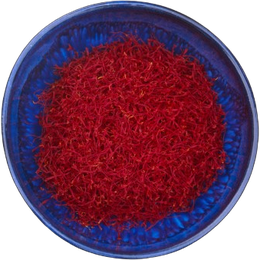
How to make it
You'll need: a small pinch of Reserve Threads (about eight to ten threads per cup), a tiny pinch of salt, a warming spice if you'd like one (cardamom or cinnamon both work well), your milk of choice, and honey or agave syrup to taste.
- Warm the milk gently until it steams but doesn't simmer, around 60 to 80°C if you're using a thermometer, or just below the point it would start to bubble.
- While the milk warms, put the saffron threads into a mortar with the pinch of salt and your spices if using, and grind with the pestle until you have a fine powder. The salt does double duty here: as an abrasive, it breaks the threads down evenly rather than leaving fragments, and it sharpens the saffron's flavour against the honey or agave to come, the way a pinch of salt lifts any sweet dish rather than flattening it.
- Stir the powder into the warm milk and let it steep off the heat for fifteen to twenty minutes.
- Sweeten with honey or agave syrup to taste, and drink it as it is. There's no need to strain: ground this finely, the saffron blends into the milk rather than sitting as whole threads, so you get the full benefit of what you paid for rather than leaving colour and flavour behind in a strainer. If you'd prefer it served properly hot, you can gently warm it through again afterwards, without boiling.

A note on quality
This is also where the difference between whole threads and cheaper alternatives actually shows up in the cup. Ground or powdered saffron blooms faster but is far easier to cut with turmeric or other fillers, since you can't see what you're working with the way you can with whole threads. With Reserve Threads, you can watch the colour bleed slowly into the milk as it steeps, which is both part of the ritual and a genuine check on quality: real, ISO 3632 Grade I saffron colours steadily and deeply. Threads that barely tint the milk after fifteen minutes weren't worth what was paid for them.